Alzheimer's disease remains one of medicine's most intractable challenges. Fifty-five million people worldwide live with dementia, the majority with Alzheimer's — a condition that erodes memory, personality, and independence, and for which there is still no cure and only a handful of treatments that modestly slow its course.
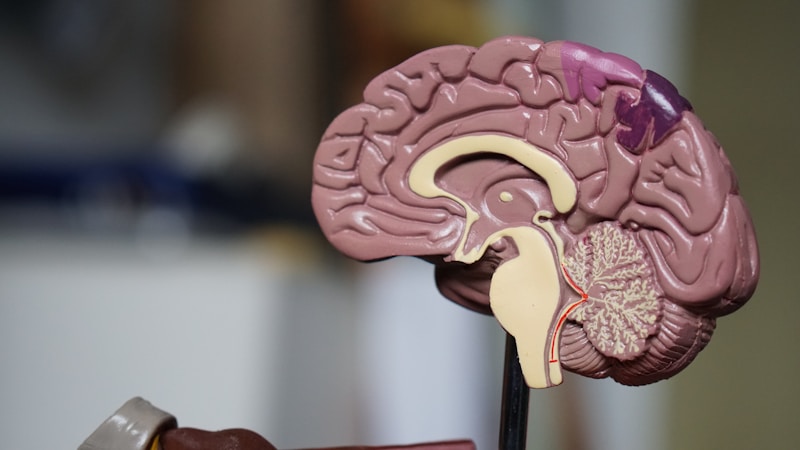
The core of the problem has been understood for decades: toxic protein clusters called **amyloid plaques** and **tau tangles** accumulate in the brain, disrupting neural connections and ultimately killing brain cells. The challenge has been finding a way to get rid of them without damaging the surrounding tissue.
Now, a team of researchers has published a new approach — and it turns the brain's own cells into the weapon.
**The Problem With Existing Approaches**
The most advanced Alzheimer's treatments currently available are **antibody-based drugs** — medicines like lecanemab and donanemab, which have shown in trials that they can reduce amyloid plaques in the brain and modestly slow cognitive decline.
These drugs represent genuine progress. But they come with significant limitations:
- They require **frequent intravenous infusions** — patients need to come into hospital repeatedly - They can cause **brain swelling and bleeding** (known as ARIA — amyloid-related imaging abnormalities) as side effects - Their benefit is **modest** — they slow decline rather than reverse it - They must be started **early**, before significant neuronal damage has occurred
The fundamental challenge: these drugs work from outside the brain, crossing the blood-brain barrier with varying efficiency, and clear plaques imprecisely.
**A New Strategy: Arm the Brain's Own Cells**
The research published in March 2026 takes a different approach. Instead of sending a drug into the brain to clear plaques, researchers asked: what if we could **reprogram brain cells that are already there** to do the clearing themselves?
The cells in question are called **astrocytes** — a type of glial cell (non-neuronal brain cell) that normally supports and protects neurons. Astrocytes are abundant throughout the brain and are already known to play roles in clearing cellular waste.
Using a gene therapy approach, researchers engineered astrocytes to **overexpress receptors** that recognise and bind to amyloid plaques — the same target that antibody drugs seek. Once bound, the astrocytes engulf and break down the plaques through a cellular process called phagocytosis.
In animal model experiments, the approach successfully reduced amyloid plaque load in the brain. Crucially, because the astrocytes are **sustained within the brain**, the clearing effect is ongoing — unlike an antibody infusion that must be repeated.
**Why It's Promising**
Several features make this approach particularly interesting:
- 🧠 **Internal vs external**: The brain's own cells do the work, from the inside, without needing to repeatedly breach the blood-brain barrier - ⏱️ **Sustained effect**: Reprogrammed astrocytes continue clearing plaques as long as they function, rather than requiring repeated dosing - 🎯 **Cell-type precision**: Astrocytes can be specifically targeted, reducing off-target effects - 🔬 **Combination potential**: The approach could be combined with tau-targeting strategies for broader effect
The researchers acknowledge significant steps remain before any human application — safety profiling, clinical trials, delivery mechanism optimisation. Alzheimer's research is littered with promising animal-model results that haven't translated to humans.
But the fundamental insight — that the brain's own support cells can be recruited as sustained plaque-clearing machines — represents a conceptual shift in how Alzheimer's treatment might work.
**The Scale of What's at Stake**
Globally, Alzheimer's disease costs an estimated **$1.3 trillion per year** in care and economic impact. In the UK, it's the leading cause of death. In the US, it affects over 6 million people, with that number projected to reach 13 million by 2050.
Every meaningful advance in treating or preventing it matters enormously — not just in life-years saved, but in the quality of life for patients, and the people who love them.
Brain cells, reprogrammed, clearing the plaques that were killing them. Science, quietly extraordinary. 🧬🌟
*Sources: ScienceDaily (March 11, 2026) · Alzheimer's Association · Alzheimer's Society UK · National Institute on Aging*