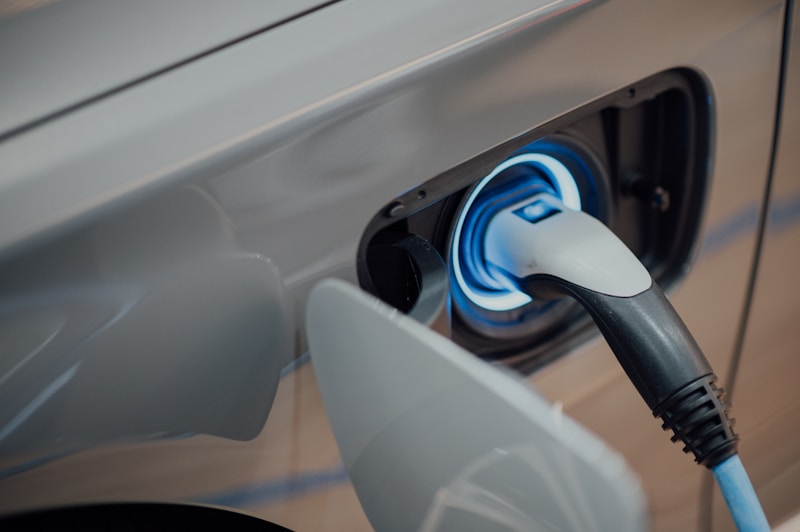
The story of electric vehicles has, until now, been fundamentally a lithium story. Every major EV battery in mass production — from Tesla's 4680 cells to the batteries in Volkswagen IDs and Hyundai IONIQs — is a lithium-ion battery. Lithium is the beating heart of the global EV transition, and its concentrated supply chains, geopolitical sensitivities, and limited extraction capacity have been a persistent concern for anyone thinking seriously about scaling electric vehicles to billions of people.
In mid-2026, that changes.
**CATL**, the world's largest battery manufacturer, and **Changan Automobile** are launching the **Nevo A06** — the world's first mass-produced passenger EV powered entirely by a **sodium-ion battery**.
And the specs are competitive with anything on the market today.
**The Naxtra Battery: What It Does**
The Nevo A06 is equipped with CATL's **Naxtra** battery — a 45 kWh sodium-ion pack that represents years of engineering work to bring sodium-ion chemistry from lab curiosity to production-grade performance:
🚗 **Range:** 248 miles (400 km) on a full charge — competitive with the entry-level Tesla Model 3 and Volkswagen ID.3 ⚡ **Fast charging:** 80% charge in approximately **15 minutes** — roughly **twice as fast** as a Tesla Model Y on a 100 kW charger 🌡️ **Cold performance:** Retains **90% of usable capacity at -40°C** — lithium-ion batteries typically lose 20–40% of capacity in extreme cold, the phenomenon known as 'cold anxiety' that has deterred EV adoption in northern climates ⚡ **Energy density:** 175 Wh/kg — within striking distance of mainstream lithium iron phosphate (LFP) batteries
**Why Sodium Matters**
The material advantages of sodium-ion chemistry go well beyond the headline figures:
🧂 **Sodium is everywhere** — it's the sixth most abundant element on Earth, found in seawater, salt deposits, and mineral formations on every continent. Unlike lithium, which is concentrated in a handful of countries (Chile, Australia, Argentina, China), sodium supply is genuinely global and essentially inexhaustible.
⚗️ **No lithium, no cobalt, no nickel** — the Naxtra battery requires none of the three minerals most associated with EV supply chain concerns. This dramatically reduces exposure to resource nationalism, mining ethics issues, and commodity price volatility.
💰 **Lower cost potential** — sodium is approximately **40 times cheaper** than lithium carbonate at current prices. As sodium-ion manufacturing scales, battery cost per kWh is expected to fall below LFP — the current cost benchmark for affordable EVs.
♻️ **Easier recycling** — the simpler material composition of sodium-ion batteries makes recycling chemistries more straightforward than lithium-ion, addressing the growing concern about end-of-life battery waste.
**The Cold Weather Breakthrough**
Perhaps the most practically significant advantage is cold-weather performance. Conventional lithium-ion batteries suffer in cold climates for electrochemical reasons: lithium ions move more slowly at low temperatures, reducing the speed of both charging and discharging.
At -40°C — the kind of temperature common in Canada, Scandinavia, Russia, and parts of the northern United States — a typical EV battery might retain only 60–70% of its warm-weather range, and fast charging can be severely limited or completely unavailable without pre-conditioning.
The Naxtra battery retains **90% of usable capacity at -40°C**. For EV adoption in cold-climate markets — which have historically been among the most resistant to switching from combustion — this is genuinely transformative.
**CATL's Strategic Vision**
CATL first announced the Naxtra battery in April 2025. The launch of the Nevo A06 represents the technology's graduation from announcement to production reality.
CATL has publicly stated its expectation that as technology matures, sodium-ion batteries will reach driving ranges of **500–600 kilometres (310–370 miles)** on a single charge — competitive with the best lithium-ion packs available today. The company describes the Nevo A06 launch as the beginning of a **'dual-chemistry' phase** for EVs, where manufacturers can select between lithium-ion and sodium-ion depending on the use case: lithium for maximum range and energy density, sodium for cost, cold weather performance, and supply chain resilience.
**BYD**, CATL's main Chinese competitor, began construction on a **30 GWh sodium-ion battery facility** in Xuzhou in early 2024, confirming that the transition to sodium-ion is an industry-wide bet, not a one-company experiment.
**The Bigger Picture**
The EV revolution's Achilles heel has always been its dependence on critical minerals — a concern that drives everything from US and EU battery supply chain legislation to debates about the sustainability of the transition itself. A competitive, mass-market, lithium-free EV battery changes the fundamental calculus.
Sodium is not going to run out. It cannot be embargoed. It doesn't require environmentally destructive extraction in ecologically sensitive regions. And the world's largest battery maker has now demonstrated that it can power a competitive passenger car.
The first sodium car does 248 miles and charges in 15 minutes. The next generation will do more. 🚗⚡🧂
*Sources: CATL · LiveScience · Electrek (February 5, 2026) · The Battery Show Asia · TechRadar · Tempo.co · IEA*


