🤝 Society
Teacher Wins $1M Prize for Turning India's Slums Into Hundreds of Open-Air Classrooms
An Indian teacher who has established more than 800 learning centers across India for children who have never attended school has been named the winner of the $1 million Global Teacher Prize from GEMS Education.
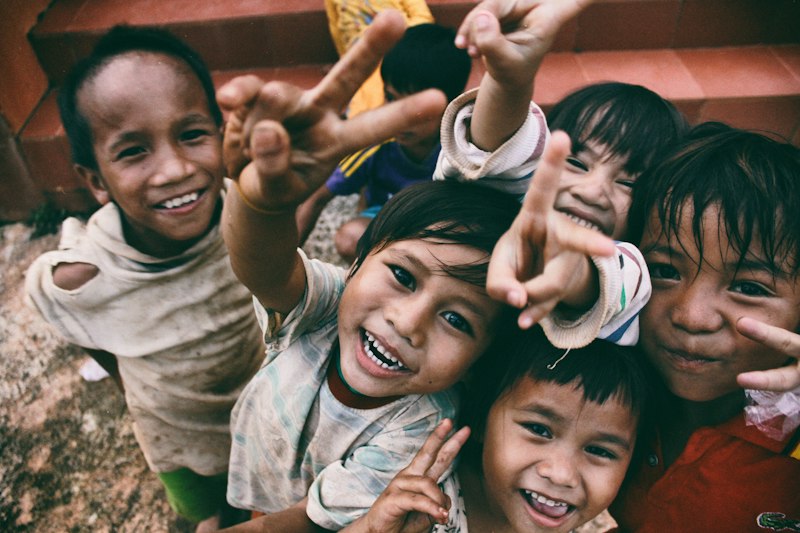
Located in over 100 slums and villages, Rouble Nagi's classrooms offer safe, inspiring spaces to help overcome the challenging conditions shaped by poverty—child labour, early marriage, irregular attendance, and a lack of infrastructure.
Rather than seeing these realities as barriers, Ms. Nagi designs education around real life: flexible schedules for working children, hands-on learning using recycled materials, and practical skills that demonstrate immediate value to families. As a result, her programs have reduced dropout rates by more than 50% and significantly improved long-term school retention.
It all started after she was asked to do an art workshop as an artist in her early 20s. 'I met a child who'd never seen a pencil, and it was the turning point of my life.'
Over the last two decades, she has helped bring more than one million children into the formal education system—and one of her not-so-secret weapons is art. She has transformed abandoned walls into large interactive murals that teach everything from reading, math, and science, to hygiene, history, environmental awareness, and social responsibility.
The murals are not decorative artworks, but open-air classrooms that draw children into learning, engage parents, and turn entire neighborhoods into partners in education.
'Rouble Nagi represents the very best of what teaching can be—courage, creativity, compassion, and an unwavering belief in every child's potential,' said Sunny Varkey, who founded the annual Global Teacher Prize.
Now in its tenth year, the Global Teacher Prize—which collaborates with UNESCO—is the largest award of its kind, with Nagi selected from over 5,000 nominations and applications from 139 countries.
Rouble, who is also the author of the book The Slum Queen, has recruited and trained more than 600 volunteer and paid educators, creating a scalable model that meets children where they are—academically, socially, and economically. She plans to use the $1 million prize money to build a free vocational institute and digital literacy training program to help transform the lives of millions more marginalized young people.