🧬 Enhanced Immune Cells Show Promise for HIV Remission Without Daily Medication
More than 30 million people worldwide living with HIV must take antiretroviral therapy (ART) medications daily to keep the virus under control. While effective, these drugs don't eliminate the virus—HIV remains hidden in "reservoirs" throughout the body, ready to reactivate if treatment stops. But now, researchers have made a significant breakthrough that could change everything.
🔬 The Breakthrough
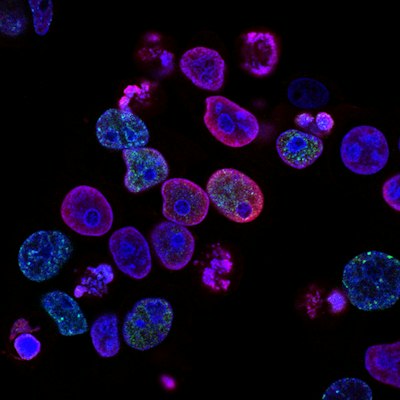
Scientists at Case Western Reserve University, in collaboration with the University of Pittsburgh, have discovered that Natural Killer (NK) cells—specialized immune cells that naturally target virus-infected and tumor cells—can be enhanced in the lab to better fight HIV infections.
The research team found that NK cells taken from HIV-positive patients can be expanded and enhanced to more effectively target and reduce viral reservoirs. This discovery marks a significant step toward long-term HIV remission by enhancing the body's own immune system.
💡 Why This Matters
"NK cell immunotherapy is already being used for cancer therapy, and the data from those studies provides a great foundation for translation of this approach to an HIV cure strategy," said Mary Ann Checkley-Luttge, senior research associate at Case Western Reserve School of Medicine, who led the study.
The approach could enable people with HIV to control the virus without lifelong dependence on daily antiretroviral medications. This would be life-changing for millions who must maintain strict medication schedules to stay healthy.
🎯 How It Works
Unlike traditional treatments that suppress the virus, this approach:
- Uses the body's own immune system - NK cells are natural virus fighters already in our bodies
- Targets hidden virus reservoirs - Goes after HIV hiding in cells throughout the body
- Builds on proven cancer therapy - NK cell therapy already works in cancer treatment
- Offers "off-the-shelf" potential - Could be developed as ready-to-use therapy
⏭️ What's Next
"Our team's next goals are to test whether lab-enhanced NK cells can work as 'off-the-shelf' therapy," explained Jonathan Karn, Distinguished University Professor and chair of the Department of Molecular Biology and Microbiology at Case Western Reserve. "We plan to conduct studies using advanced animal models that closely mimic HIV infection in humans and then work toward clinical trials in the next two years to test this approach in people living with HIV."
🤝 Built on Collaboration
The research was made possible through blood donations from people living with HIV and represents a collaborative effort between patients, researchers, and institutions working toward better HIV treatments. Case Western Reserve's NIH-designated Center for AIDS Research, founded more than 30 years ago, provided the robust infrastructure needed for this groundbreaking work.
🌟 The Bigger Picture
This breakthrough represents more than just a new treatment approach—it's a paradigm shift in how we think about HIV treatment. Instead of suppressing the virus indefinitely, scientists are working toward true remission, where the body can control HIV naturally without daily medication.
For the 30+ million people worldwide living with HIV, this research offers genuine hope for a future where HIV becomes a manageable condition that doesn't require lifelong pharmaceutical dependence.
📖 Published in: mBio (American Society of Microbiology)
💌 Want more stories like this?
Subscribe to our newsletter for daily doses of good news delivered to your inbox.
Subscribe Now