🌱 Climate change
EVs Are Already Cleaning the Air — Satellites Just Proved It
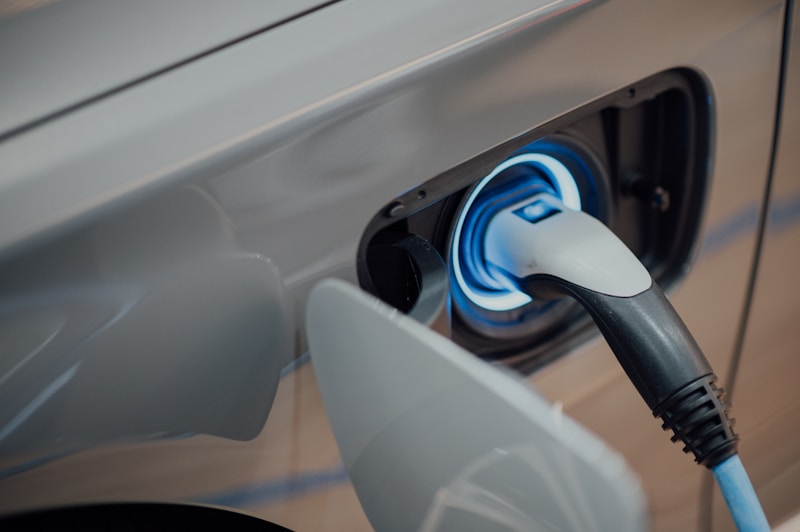
For years, the promise of electric vehicles has been clear in theory: fewer fossil fuels burned, less air pollution, healthier cities. But translating that promise into measurable, real-world evidence has been harder than it sounds.
Now, a landmark study from the **Keck School of Medicine at USC** has provided exactly that — and the results are unambiguous.
Published in ***The Lancet Planetary Health*** in January 2026, the research found that for every **200 zero-emission vehicles** added to a California neighbourhood, annual average nitrogen dioxide (NO2) levels dropped by approximately **1.1%**.
Cleaner air is already happening. The satellites proved it.
## How the Study Worked
The research team, led by epidemiologist **Dr. Sandrah Eckel**, analysed data from 2019 to 2023 across **1,692 California zip codes** — covering the full spectrum of the state's communities, from urban cores to rural valleys.
The key innovation was using **high-resolution satellite data** to measure nitrogen dioxide concentrations across those neighbourhoods. This is the first study to use satellite measurements to quantify the community-level air quality benefits of EV adoption at this scale — allowing researchers to see what is happening at a neighbourhood level rather than relying on sparse pollution monitors.
The team carefully controlled for confounding factors — pandemic-related traffic changes, shifts in gas prices, work-from-home patterns, and regional weather variation — to isolate the EV effect.
The results showed a clear, statistically significant relationship: **more EVs = less NO2.** As a control, they also confirmed that neighbourhoods where gas-powered vehicle registrations increased saw a corresponding rise in pollution.
## Why Nitrogen Dioxide Matters
Nitrogen dioxide is a harmful air pollutant released by internal combustion engines, power plants, and industrial processes. It is directly harmful to respiratory health — triggering and worsening asthma, causing bronchitis, and increasing long-term risk of heart disease and stroke.
In California — a state with some of the most car-dense cities in the world — NO2 from vehicles has been a persistent public health problem for decades. Low-income and minority communities, often located near highways, bear a disproportionate burden.
## The Broader Picture
Between 2019 and 2023, zero-emission vehicles grew from just **2% to 5%** of all light-duty vehicles registered in California. That is still a small fraction — and yet the satellite data already shows a measurable improvement in air quality across 1,692 communities.
The implications are clear: as EV adoption continues to accelerate, the air quality benefits will compound. A state that reaches 20%, 30%, or 50% EV adoption could see dramatic improvements in the health of its communities.
'Cleaner air is already happening in communities across California,' said Dr. Eckel. The transition is real. The numbers are in. 🌱
*Sources: The Lancet Planetary Health (January 2026) · Keck School of Medicine, University of Southern California · Electrek · LAIST · The Cooldown*