In July 2024, when Professor Paul Edison's team at Imperial College London first presented results from the ELAD trial at the Alzheimer's Association International Conference, the audience response was striking. Here was a drug already in widespread use for weight loss and diabetes — cheap, well-understood, with a known safety profile — apparently doing something that many bespoke Alzheimer's drugs had failed to do: meaningfully slowing the brain's decline.
When those results were formally published in ***Nature Medicine*** on **December 1, 2025**, the wider scientific community's reaction was the same. Something genuinely important had happened.
**What the ELAD Trial Found**
The **Evaluating Liraglutide in Alzheimer's Disease (ELAD)** trial enrolled **204 participants** without diabetes who had been diagnosed with mild to moderate Alzheimer's disease. They were randomly assigned to receive either daily injections of **liraglutide** — a GLP-1 receptor agonist used clinically as Victoza (diabetes) and Saxenda (weight management) — or a placebo, for 52 weeks.
Liraglutide did not meet its primary endpoint: it didn't significantly change the cerebral glucose metabolic rate (the main measure the trial was designed to detect). That would normally be the end of the story.
But the secondary and exploratory outcomes told a different one.
**The Brain Shrinkage Finding**
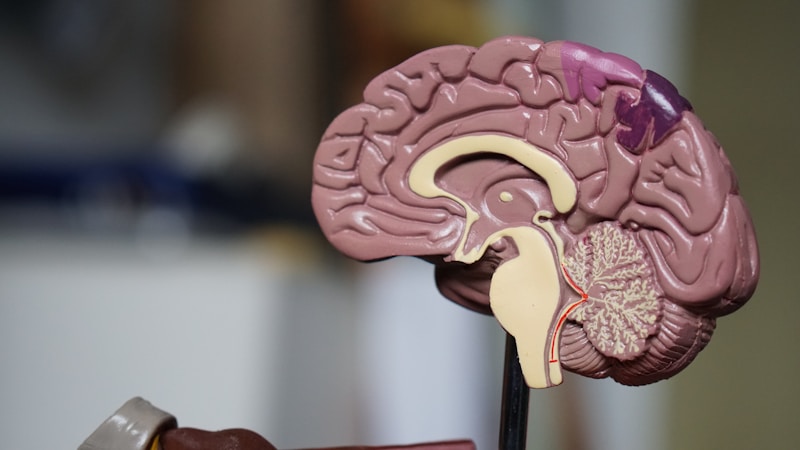
The most striking result was in brain volume. Over the 12-month trial, participants who received liraglutide experienced **nearly 50% less brain volume loss** in several critical regions — including the frontal lobe, temporal lobe, parietal lobe, and total grey matter — compared to those on placebo. The reduction was **statistically significant**.
Brain shrinkage — cortical atrophy — is one of the hallmarks of Alzheimer's disease. As neurons die and connections are lost, the brain literally reduces in size. Measurements of atrophy rate are increasingly used in clinical trials as proxy markers for disease progression.
Cutting the rate of atrophy in these regions by roughly half is, on the face of it, a very large effect for a drug not designed for Alzheimer's disease at all.
**18% Slower Cognitive Decline**
Beyond the brain imaging findings, the trial also found that patients receiving liraglutide showed an **18% slower decline in cognitive function** over the treatment year compared to those on placebo. The effect was measured using standardised cognitive assessment tools.
An 18% slowing of cognitive decline over a year — if maintained — represents meaningful additional time for patients and families before the disease reaches more severe stages.
**How Might It Work?**
Liraglutide is a **glucagon-like peptide-1 (GLP-1) receptor agonist** — part of the same drug class that includes semaglutide (Ozempic/Wegovy), which has become one of the most discussed pharmaceutical compounds of the decade for its effects on weight loss and metabolic disease.
The brain has GLP-1 receptors too, concentrated in regions involved in cognition, memory, and mood. Researchers believe liraglutide may be protecting the brain through several mechanisms:
🧠 **Reducing neuroinflammation** — GLP-1 drugs appear to suppress inflammatory processes in the brain that contribute to neuronal damage in Alzheimer's
🧠 **Improving insulin signalling** — Alzheimer's has sometimes been called 'type 3 diabetes' because of the impaired brain insulin signalling seen in patients; GLP-1 agonists improve insulin response
🧠 **Influencing tau and amyloid** — early evidence suggests GLP-1 drugs may slow the accumulation or aggregation of the tau proteins and amyloid plaques that are the molecular hallmarks of Alzheimer's disease
🧠 **Supporting neuronal survival** — GLP-1 receptors are involved in signalling pathways that affect the survival of neurons
The exact mechanism remains the subject of active investigation, and it is likely that multiple pathways contribute to whatever protective effect the drug produces.
**Why This Matters Beyond the Numbers**
The ELAD results arrive in a specific context. The Alzheimer's field has, over the past decade, seen massive investment in drugs that target amyloid plaques — the protein deposits that accumulate in the brains of patients. Lecanemab and donanemab have been approved in the United States following trials showing modest but real effects on disease progression. They work. But they are expensive, require regular intravenous infusions, carry risks of brain swelling and bleeding, and demand intensive monitoring.
Liraglutide is, by contrast, a drug with 15 years of real-world safety data, available as a daily self-administered injection, and — in generic form — far cheaper than novel Alzheimer's biologics.
If Phase 3 trials confirm what Phase 2 has suggested, liraglutide could offer a more accessible, more scalable tool for slowing Alzheimer's progression than anything currently in clinical use.
**What Comes Next**
The ELAD results are driving investment in larger Phase 3 trials to test whether the effects hold in bigger, more diverse populations over longer timeframes. Several GLP-1 drug trials in Alzheimer's are now underway or in planning, with semaglutide also being studied following liraglutide's encouraging Phase 2 signals.
Professor Edison's team at Imperial continues to analyse ELAD data for additional insights. The Nature Medicine publication has also spurred interest in combining GLP-1 therapy with existing amyloid-targeting treatments — the possibility that the two approaches might work synergistically.
For a disease that affects over **50 million people worldwide** — a number projected to triple by 2050 — any drug that meaningfully slows the pace of decline represents an enormous potential gain in human wellbeing.
The ELAD trial didn't meet its primary endpoint. But in doing so, it may have opened a door that the Alzheimer's field has been looking for. 🧠
*Sources: Nature Medicine (December 1, 2025) · Imperial College London · Alzheimer's Association International Conference 2024 · Practical Neurology · Alzheimer Europe · NeurologyLive · PubMed*