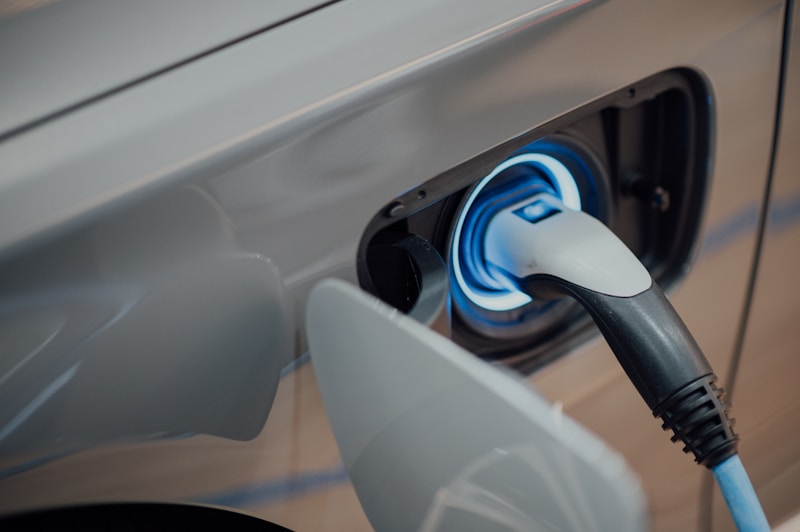
In 2017, Norway set itself a goal that seemed almost recklessly ambitious: by 2025, all new car sales should be zero-emission vehicles. Other countries scoffed. The car industry called it unrealistic. And yet.
In 2025, Norway sold **179,549 new passenger cars** — a new all-time national record. **95.9% of them were pure battery-electric vehicles.** Add in plug-in hybrids, and the total reaches **97.5%**. The target wasn't just met; it was exceeded with room to spare.
For all practical purposes, the era of the fossil fuel car in Norway is over.
**The Numbers Are Staggering**
To understand quite how remarkable this is, consider the global context. The worldwide average for EV sales in 2025 is somewhere between 17-20% of new car sales. China, the global EV leader, hit roughly 50% in 2025. The United States managed around 9%.
Norway is operating in a different dimension entirely.
In September 2025, EV market share reached **98.3%** for that single month. In December, it was close to 98%. There were months in 2025 when it was genuinely difficult to buy a new petrol or diesel car in Norway — not because they were banned, but because nobody was making them worth buying.
**EVs Now Outnumber Diesels**
Perhaps even more significant than the new car sales figure is what happened to the overall car fleet. As of December 2025, **electric cars outnumber diesel cars on Norway's roads** — a milestone that would have been unimaginable when Norway started its EV journey in the early 2010s.
This isn't just about new cars anymore. Norway has achieved sufficient scale and duration of EV adoption that the entire vehicle fleet is transforming. The internal combustion engine is in managed decline — not just at dealerships, but on the roads themselves.
**How Did Norway Do It?**
Norway's success didn't happen by accident, and it wasn't achieved by banning petrol cars or forcing consumers into choices they didn't want. It happened through a set of consistent, smart, sustained incentives that made EVs **the economically rational choice** for ordinary consumers:
- **No purchase tax on EVs** — Norway charges a substantial registration tax on conventional cars based on weight, CO₂ emissions, and NOx output. For a typical mid-range petrol car, this can add €10,000-15,000 to the purchase price. EVs pay zero. - **25% VAT exemption** — Norway's standard VAT rate is 25%. EVs were exempt from VAT on purchase, significantly reducing sticker prices relative to comparable petrol models. - **No road tolls** — Norway's cities and motorways have extensive toll systems. EVs drive free. In Oslo, that can save thousands of euros per year. - **Cheap electricity** — Norwegian electricity is abundant, clean (mostly hydro), and cheap. Charging an EV in Norway costs a fraction of filling a petrol tank. - **Charging infrastructure** — Norway invested early and heavily in charging networks, eliminating range anxiety that deterred buyers in other markets.
The result: EVs became cheaper to buy, cheaper to run, and more convenient than petrol cars for most Norwegians. The transition wasn't a sacrifice — it was a better deal.
**The Road Ahead**
Norway's success has global significance because it proves the transition is achievable. The sceptics who argued that consumers would never voluntarily choose EVs in large numbers were simply wrong. When the economics work, when the infrastructure exists, when the cars are genuinely good — people choose them.
Norway is already thinking about what comes next: maritime shipping, aviation, heavy trucks. The country that showed EVs could replace petrol cars entirely is now asking the same question about the harder-to-decarbonise parts of transport.
The 2017 target seemed impossible. In 2025, Norway didn't just hit it — they blew past it, set a new sales record, and watched EVs outnumber diesel cars on their roads for the first time in history.
Elsewhere in the world, this is the future. In Norway, it's already the present. ⚡🚗
*Sources: Electrek (January 2026) · Just Auto · OFV (Norwegian Road Federation) · Alternative Fuels Observatory, European Commission · ESG News*


