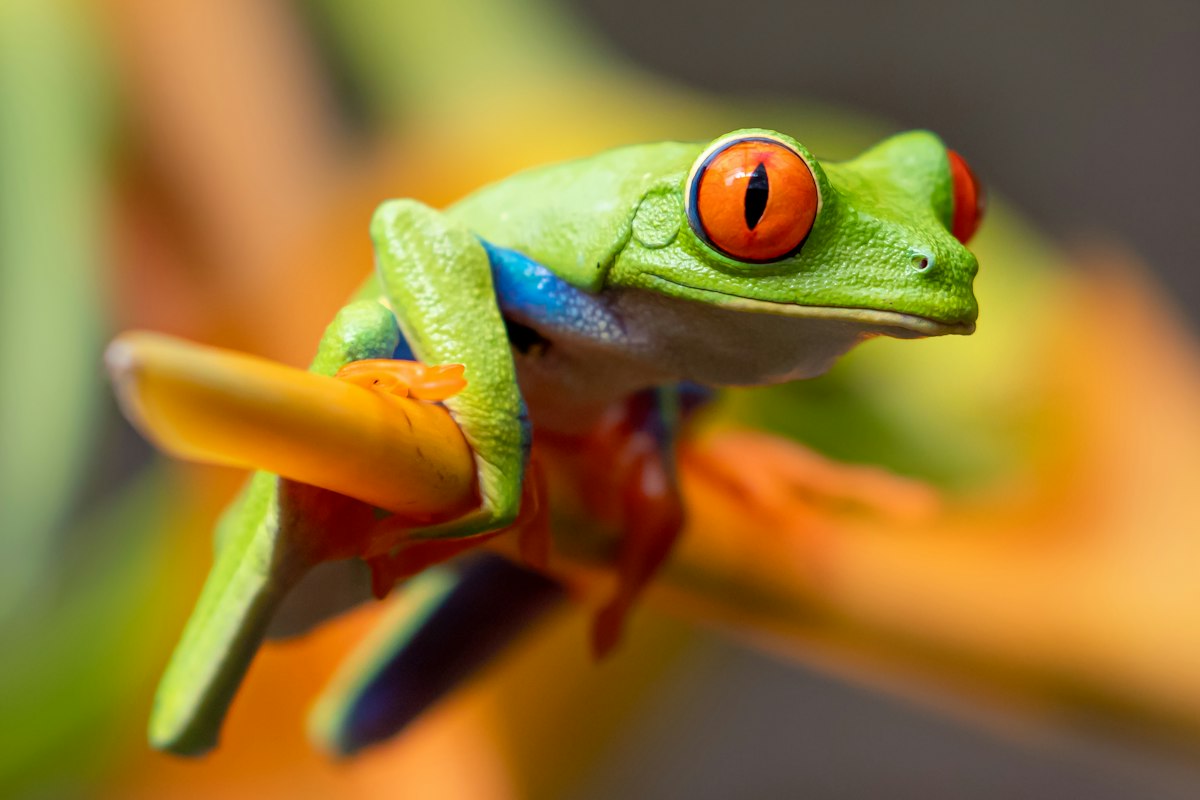
Panama's beloved golden frogs — the brilliant, tiny national symbol once thought functionally extinct in the wild — are hopping through their native habitat once more, after 17 years of painstaking captive breeding kept the species alive against all odds.
The Panamanian golden frog (Atelopus zeteki) is one of the most recognisable amphibians on Earth — a bright, almost luminous yellow creature that has been a cultural icon in Panama for centuries. But in the late 1980s, an invisible enemy arrived: Batrachochytrium dendrobatidis (Bd), a deadly fungal pathogen.
The Crisis
The chytrid fungus spread relentlessly through Panama's waterways. Golden frogs, which live exclusively near streams, were catastrophically vulnerable. The fungus attacks amphibian skin, disrupting electrolytes and ultimately causing heart failure.
By 2004, the fungus had reached El Valle de Antón — the last concentrated wild population. By 2009, golden frogs had completely vanished from the region. The species was functionally extinct in the wild.
17 Years of Hope
But wildlife biologists at the Smithsonian-affiliated Panama Amphibian Rescue and Conservation Project (PARC) refused to let the species die. For nearly two decades, they meticulously bred golden frogs in controlled facilities, building stable captive populations generation by generation.
"We provide care for some of the most endangered amphibians in Panama, and now we are entering a new phase of our work to study the science of rewilding." — Roberto Ibañez, PARC Director
Back to the Wild
The reintroduction hasn't been easy. Chytridiomycosis still exists in the wild, and researchers estimate about 70 of the first 100 released frogs succumbed to the disease during the initial 12-week soft release. But crucially, many survived — and the data is invaluable.
"These crucial data will inform our conservation strategy moving forward. Our earlier modelling suggested there may be release sites we can select that will be climatic refuges — places suitable for the frogs but too hot for the fungus." — Brian Gratwicke, Conservation Biologist
Scientists are now using the data to identify optimal release locations — areas where temperature and humidity create conditions hostile to the fungus but hospitable to the frogs. It's precision conservation at its finest.
Why It Matters
The golden frog's return is about far more than one species. Chytrid fungus has devastated amphibian populations worldwide, driving at least 90 species to extinction. The lessons learned from Panama's programme could become a blueprint for saving amphibians globally.
For Panama, it's deeply emotional. The golden frog appears on lottery tickets, in folklore, and as a symbol of good fortune. Seeing them return to the wild after nearly two decades is a conservation triumph — proof that determination, science, and patience can bring a species back from the very edge. 🐸🌿✨