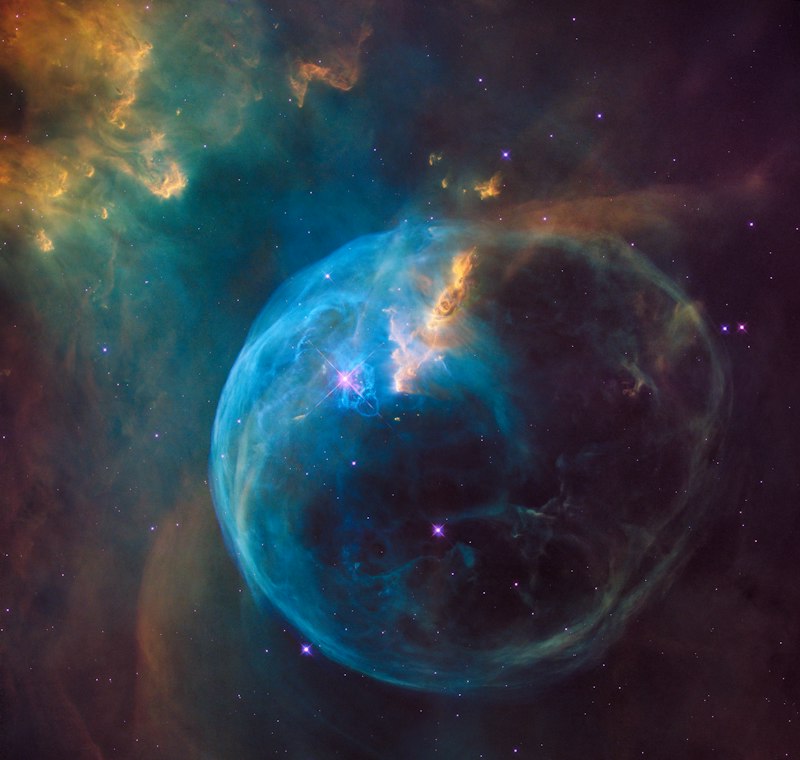
NASA’s James Webb Space Telescope has turned its infrared eyes toward one of the universe’s great nurseries: star clusters inside nearby galaxies.
NASA shared a Webb image of a spiral arm in Messier 51, also known as M51. The galaxy is one of four nearby galaxies observed in a study of nearly 9,000 star clusters, using Webb’s ability to see details that help researchers understand how stars are born inside clouds of gas and dust.
Learning how clusters emerge
The early signal from the study is fascinating: NASA says more massive star clusters appear to emerge more quickly from the clouds where they form. That matters because star formation is one of the engines of galactic evolution. The way clusters form, clear their surroundings and settle into a galaxy helps shape everything from the galaxy’s structure to the conditions around future planets.
Space images are often beautiful first, but they are also working data. A single section of a spiral arm can carry clues about how matter gathers, lights up and becomes the next generation of stars.
A clearer cosmic family album
The hopeful part is the scale of learning. By comparing thousands of clusters across nearby galaxies, astronomers can move from isolated snapshots to patterns. Webb is helping turn the night sky into a more detailed family album of where stars come from and how galaxies keep changing.
Source: NASA, reporting on Webb’s near-infrared image of Messier 51 and a study of nearly 9,000 star clusters in four nearby galaxies.